
Fairfax County & Northern Virginia
Electrical Safety Inspection in Fairfax, VA
Not a permit inspection, not a code sign-off — a walk through your home’s wiring by a licensed electrician who tells you what he sees, in writing, and doesn’t charge you to look.
Whole-house electrical safety inspections from Ahmad Shaban, a licensed Virginia Master Electrician who does every job himself. The inspection is free. No trip fee either way, and free estimates on any repair work too.
Rated 5.0 from 122 Google reviews · Virginia Master Electrician · VA MELE #2710086216
What a safety inspection is, and isn’t
“Electrical inspection” means two different things, and mixing them up is how people end up calling the wrong number.
A permit inspection
Tied to a specific job — a new panel, a new circuit, an EV charger. A jurisdiction inspector signs off that the work that was just done meets code. It only happens because a permit was pulled for that job, and it only covers that job.
A safety inspection
Not tied to any permit or any job. Ahmad walks the whole house — panel, wiring, outlets, life-safety devices — and tells you the condition of what’s already there, whether or not any work is planned. This is what this page is about.
What you get instead of a pass/fail
A permit inspection ends in pass or fail against a specific job. A safety inspection ends in a written report of what he found, sorted by how soon it’s worth acting on — see the next two sections.
What you get, in writing
The inspection itself is a walkthrough. What makes it useful afterward is that it doesn’t stay in Ahmad’s head.
- A written summary of what he found, room by room and system by system — panel, wiring, outlets, life-safety devices — not a verbal “looks fine” on his way out the door.
- Photos of anything worth documenting, so you’re not trying to remember what he pointed at three weeks later.
- Everything sorted by urgency — fix now, fix soon, or just worth knowing about — so you know what actually needs a call back and what can wait for a normal remodel.
- No pressure to book anything on the spot. The report is yours whether or not you have him back to do the work.
The inspection and the report are both free. No trip fee either way — free estimates for the inspection or for any repair work afterward.
This is the part most “free inspection” offers skip. A lot of them are really a foot in the door for a sales pitch — the “inspection” is a five-minute glance built around getting you to sign something before he leaves. This one is a document you keep, whether you ever call him again or not, and it’s yours to show a lender, an insurer, or the next electrician you talk to.
It’s also worth saying what the report isn’t. It’s not a code compliance certificate and it’s not a permit sign-off — see the difference above. It’s Ahmad’s professional read on the condition of what’s in your walls and panel right now, written down so you don’t have to remember it or take his word for it after he’s gone.
What gets checked
A whole-house inspection covers four areas. Here’s what’s actually being looked at in each one, and where a finding tends to lead if it turns out to need more than a note in the report — often back to a page like electrical troubleshooting or panel upgrade, depending on what’s found.
Panel and breakers
Panel condition — rust, scorch marks, double-tapped breakers. Whether breaker sizing matches the wire gauge behind it. Whether the panel is a known problem brand. Grounding and bonding at the panel. Whether there’s room left for anything you might add later. If the panel itself turns out to be the issue, that’s a conversation about panel upgrade, not a same-visit swap — you’ll get a separate quote for it, never a surprise repair.
Wiring condition and type
What’s actually run through the attic, basement or crawlspace — copper, aluminum branch wiring, or knob-and-tube if the house is old enough for it. Insulation condition. Any DIY splices or unpermitted work. Whether a circuit is carrying more than it was sized for. If one specific breaker turns out to be the problem rather than the panel as a whole, that’s circuit breaker replacement instead of a bigger job.
Outlets, switches, safety devices
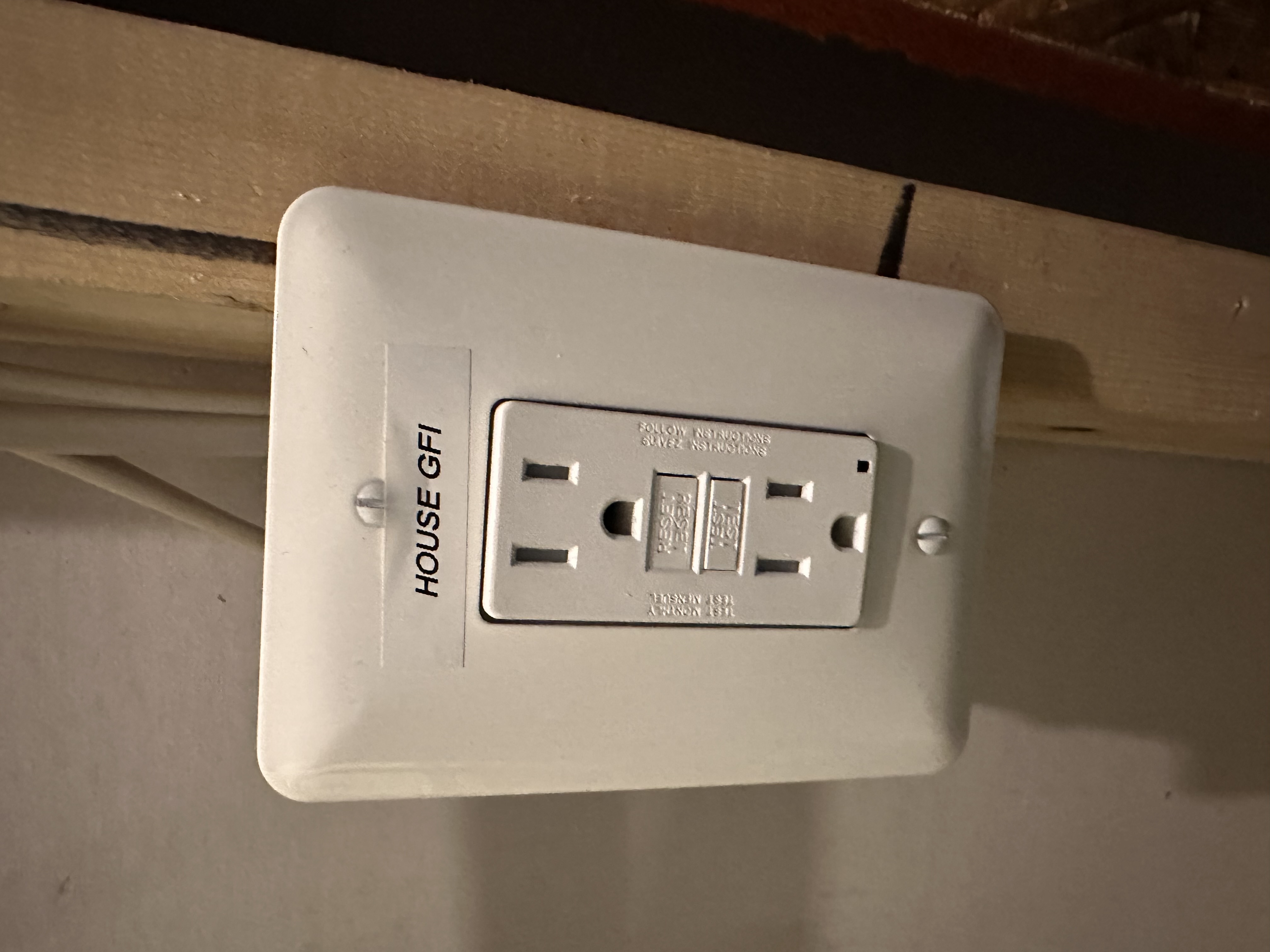
GFCI protection where it’s supposed to be — kitchens, bathrooms, garage, outdoors, basement. AFCI protection on bedroom circuits where it applies. Loose, warm or reversed-polarity outlets. Old two-prong outlets with no ground, and whether the switches and fixtures they feed show any wear worth a closer look.
Life-safety and exterior
Smoke and CO alarms — whether they’re present, placed correctly, and not past their 10-year service life. Where alarms are missing or expired, that’s a straightforward fix through smoke alarm installation. Also checked: the exterior service mast and weatherhead, the grounding rod and its bond to plumbing, and any exposed or damaged wiring outside the house.
What turns up most often, by urgency
Every finding in the report gets one of three labels, so you know what actually needs a callback.
Active safety hazards
Double-tapped breakers. Scorch marks or heat damage at the panel. Missing GFCI protection in a wet location. Exposed or damaged wiring. Ungrounded outlets in a kitchen or bathroom. A recalled panel brand. Missing or dead smoke and CO alarms. These get flagged first, and they’re what most homeowners want to know about immediately, even before the rest of the report is finished.
Real gaps, not emergencies
Aluminum branch wiring without the right connectors. A panel that’s undersized for the home’s current load. Missing AFCI protection on bedroom circuits. Wiring in an addition or renovated area that doesn’t match the rest of the house. Smoke alarms that are still working but past their 10-year service life. Worth scheduling, not worth panicking over.
Informational, plan around it
A panel with room for one or two more circuits but not much more. Outlets that are original to a decades-old home and could be upgraded on a normal remodel timeline. General wear that isn’t a safety issue yet. This is the category most homes fall into for most of what he finds — not everything on a report is a problem.
When people book one
There’s rarely one single reason. These are the six that come up most.
An older home
Homes built before the 1970s were wired for a different century of appliances. If you don’t know the wiring history of a house you’ve owned a while, this is how you find out. See also: whole-house rewire.
After DIY or unpermitted work
A previous owner’s weekend project, or your own. Worth having a second set of eyes on anything that was done without a permit or an electrician, especially before you build on top of it.
Before adding a big new load
An EV charger, a hot tub, a large addition. Before spending money on new equipment, it’s worth knowing whether the panel behind it can actually carry the load. See EV charger installation.
Recurring symptoms
Breakers that trip more than they used to, flickering lights, warm outlets. None of these are emergencies on their own, but they’re the kind of thing worth having looked at rather than living with. See electrical troubleshooting.
An insurer or lender asking
Some insurance policies and some lenders ask for an electrical inspection on an older home before they’ll write or renew a policy or close a loan. Worth confirming what they’ll accept before booking — see the FAQ below.
After a storm or power event
A surge, a lightning strike nearby, or a utility power event that tripped breakers across the house. Worth having someone confirm nothing was damaged rather than assuming everything’s fine because the lights came back on.
None of these need to be a crisis to be worth acting on. Most inspections we do are booked by someone who’s owned a house for years, isn’t dealing with an emergency, and just wants an honest read on where things stand. If that’s you, get in touch and we’ll set up a time that works.
Who you can have do it
“Electrical inspection” gets you three genuinely different kinds of visit. Worth knowing which one you’re booking.
A general home inspector
Covers the electrical system as one part of a whole-house inspection that also includes roofing, plumbing, HVAC and structure. Broad, and genuinely useful when you’re buying a house and need every system looked at in one visit. Not licensed to do electrical work themselves, so anything found in the electrical section gets referred out to someone else.
The right call during a home purchase, alongside everything else being inspected at the same time. Not who you’d call for a standalone electrical-only inspection.
A firm that separates inspection from repair
Some companies inspect only, and refer any repair work to someone else — the idea being no incentive to find problems that aren’t there. In practice it means a second call, a second visit, and someone else pricing the fix without having done the original walkthrough or seen the house firsthand.
A reasonable model, and some homeowners prefer the separation on principle. The tradeoff is continuity — the person who found it isn’t the person who fixes it, and something can get lost between the two visits.
An electrician who does both
Inspects and, if you want the work done, prices and does it himself — no handoff, no second visit, no re-explaining what was found to someone new. The same person who wrote the report is accountable for the fix, and already knows the house.
The tradeoff people sometimes worry about is being sold work that isn’t needed. Ask for the findings in writing before agreeing to anything — that’s exactly what the report is for, and you’re never asked to approve work on the spot.
Old wiring: where inspection becomes work
Some findings are worth noting. A few change the whole scope of what a house needs.
Knob and tube
Found in homes built before the 1940s that haven’t been fully rewired. Not automatically dangerous if it’s intact, unmodified and not buried under insulation, but it wasn’t designed for modern loads, and it’s a common reason insurers ask questions before renewing a policy. An inspection tells you whether it’s present, where, and how much of the house it actually covers.
Aluminum branch wiring
Common in homes built roughly 1965–1975, when copper prices pushed builders toward aluminum for a stretch. Not a reason to panic on its own, but the connections need the right hardware — a standard copper-rated outlet or switch on aluminum wiring is a real fire risk over time from loosening and overheating at the connection point, not a hypothetical one.
Ungrounded circuits
Two-prong outlets with no ground, common in homes from before grounding was standard practice. Not automatically an emergency, but it limits what you can safely plug in — a lot of modern electronics and appliances expect a ground — and it’s worth knowing before you assume every outlet in the house is wired the same way.
When it’s bigger than a repair
If what’s found is widespread rather than isolated — knob and tube through most of the house, aluminum wiring on every circuit, a panel and wiring that are both original to a decades-old build — the report will say so plainly, and the honest conversation shifts from a repair list to a whole-house rewire. That’s not the default recommendation for most homes, but when it’s the right one, you’ll hear it stated directly, not talked around.
What it costs, and exactly what “free” covers
Free = he looks at the system and tells you what he sees, in writing. That’s the inspection, the walkthrough, and the report — all of it, every time, no charge.
Not free = actually doing the work the report recommends. If something needs fixing and you want him to fix it, that’s a separate, itemized quote you approve before anything starts.
- No charge for the inspection itself, and no charge just for him to come look and tell you what he sees.
- No trip fee, free estimates — whether or not you book any work afterward.
- No pressure and no obligation. The report is yours either way.
- If repair work is wanted, it’s priced and approved before it starts — never a surprise on the invoice.
Free inspection, free written report, no trip fee, free estimates. The only thing you’d ever pay for is work you’ve already approved.
Who does the work
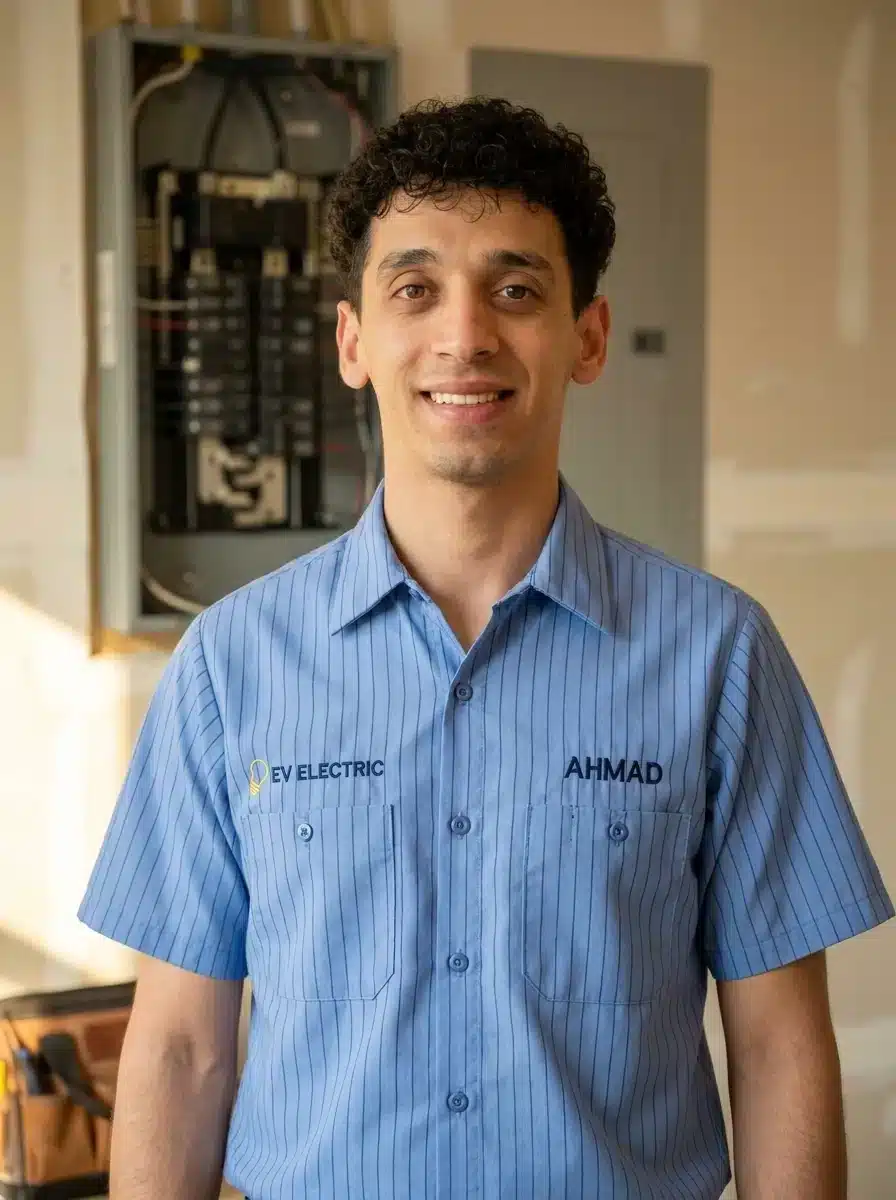
Ahmad Shaban is a licensed Virginia Master Electrician and does every inspection himself. On a report you’re going to make decisions from, that matters — the person who walked your house and wrote the findings is the same person you can call back with a question about any of it.
Virginia Master Electrician license
VA MELE #2710086216
Rated 5.0 from 122 Google reviews.
What happens when he comes out
You describe the house
Rough age, any known history — past renovations, DIY work, anything that’s been bothering you like a tripping breaker or a flickering light. Helps him know what to look for before he arrives, and roughly how long the walkthrough will take.
The walkthrough
Panel, wiring where it’s visible, outlets, switches, life-safety devices. He’s checking, not just glancing — testing outlets with a meter, opening the panel to look at the breakers and connections, going into the attic or crawlspace if it’s accessible rather than assuming what’s up there.
He tells you what he sees, on the spot
Anything urgent, he’ll say so before he leaves — you don’t wait days to hear about a real safety issue like exposed wiring or a missing smoke alarm. Lower-priority findings go into the report rather than a rushed verbal rundown at the door.
The written report
Emailed or texted, sorted by urgency, with photos where it helps. If you want any of it fixed, that’s a separate quote you approve before work starts — the report itself never arrives with a bill attached.
This inspection covers Fairfax and the surrounding area — see the full list on where we work, or everything else we do beyond inspections.
A recent inspection
“I was impressed with the response time and the professionalism. Ahmad contacted me and was at my house within 1½ [hours]. He explained everything to me. My issue was resolved. He also did an electrical inspection of my entire house and made recommendations. I’ll be using EV Electric to complete the recommendations.”
— Jessie Ragsdale, Google Review
This is the pattern most inspections follow — Ahmad was originally called out for one specific issue, did a full walkthrough while he was there anyway, and handed over a written list of recommendations rather than just fixing the one thing and leaving. Whether the visit starts as a standalone inspection or grows out of a repair call, the report works the same way.
Electrical safety inspection questions
How much would an electrical inspection cost?
The safety inspection itself is free — no charge for him to come look at the system and tell you what he sees, in writing. If the report finds something worth fixing and you want the work done, that’s a separate itemized quote you approve first, whether it turns out to be a small repair or something bigger like a panel upgrade. There’s never a surprise charge for the inspection or the report — request one here.
What do they do for an electrical inspection?
Ahmad walks the panel, wiring where it’s visible, outlets, switches and life-safety devices, testing rather than just looking. You get a written report afterward — sorted by urgency, with photos where it helps — whether or not you have any work done. It’s the same process whether the house is a starter condo or a large older home.
Can an electrician do electrical inspections?
Yes — this is a licensed electrician’s inspection, not a general home inspector’s. The difference is that the same person who finds an issue can also price and fix it, with no handoff to someone else who has to re-diagnose it from scratch after a second visit.
What do they check on an electrical inspection?
Four areas: the panel and breakers, the wiring itself (type, condition, whether it’s sized right), outlets and safety devices like GFCI and AFCI protection, and life-safety items like smoke and CO alarms plus the exterior service connection. See “What gets checked” above for the full breakdown of each.
What will fail an electrical inspection?
This isn’t a pass/fail permit inspection, so nothing “fails” in that sense — but the findings most likely to get flagged as urgent are double-tapped breakers, missing GFCI protection in a kitchen or bathroom, exposed or damaged wiring, and dead or missing smoke and CO alarms. Those go in the report as fix-now items, same as the ones covered in “What turns up most often” above.
How often should electrical wiring in a house be inspected?
General guidance is every 10 years for a home in normal condition, sooner for an older home — especially one with aluminum wiring or knob and tube — or after a major renovation, after buying a house, or if you’re seeing warning signs like flickering lights or breakers that trip repeatedly. This is common-sense guidance, not a Virginia code requirement for occupied homes, and it’s a reasonable rule of thumb rather than a hard deadline.
What is required for an electrical inspection?
Just access to the areas that need checking — the panel, and ideally the attic, basement or crawlspace if wiring runs through them. Nothing needs to be prepped or fixed beforehand; the point of the inspection is to find out what’s there as it currently stands, not to grade you on how tidy the crawlspace is.
Where we cover whole-house inspections
The inspection is the same whole-house walkthrough wherever you are in the service area. What changes city to city is the housing stock — how old it typically is, and which findings tend to show up most.
Related electrical work
Book a free electrical safety inspection
Whole-house walkthrough, written report, no charge for the inspection, no trip fee, and free estimates on anything found. If something needs fixing, you’ll get a separate quote to approve first.
EV-Electric Services · 9488 Fairfax Blvd, Fairfax, VA 22031 · (571) 500-6637
No trip fee, free estimates. Licensed Virginia Master Electrician.