
Attic Fan Installation — Fairfax, VA
Attic Fan Installation in Fairfax, VA
Attic fan installation in Fairfax, VA — ventilation check + proper wiring by a Master Electrician. We verify your attic has adequate intake before installing, wire a dedicated circuit, and handle the permit.
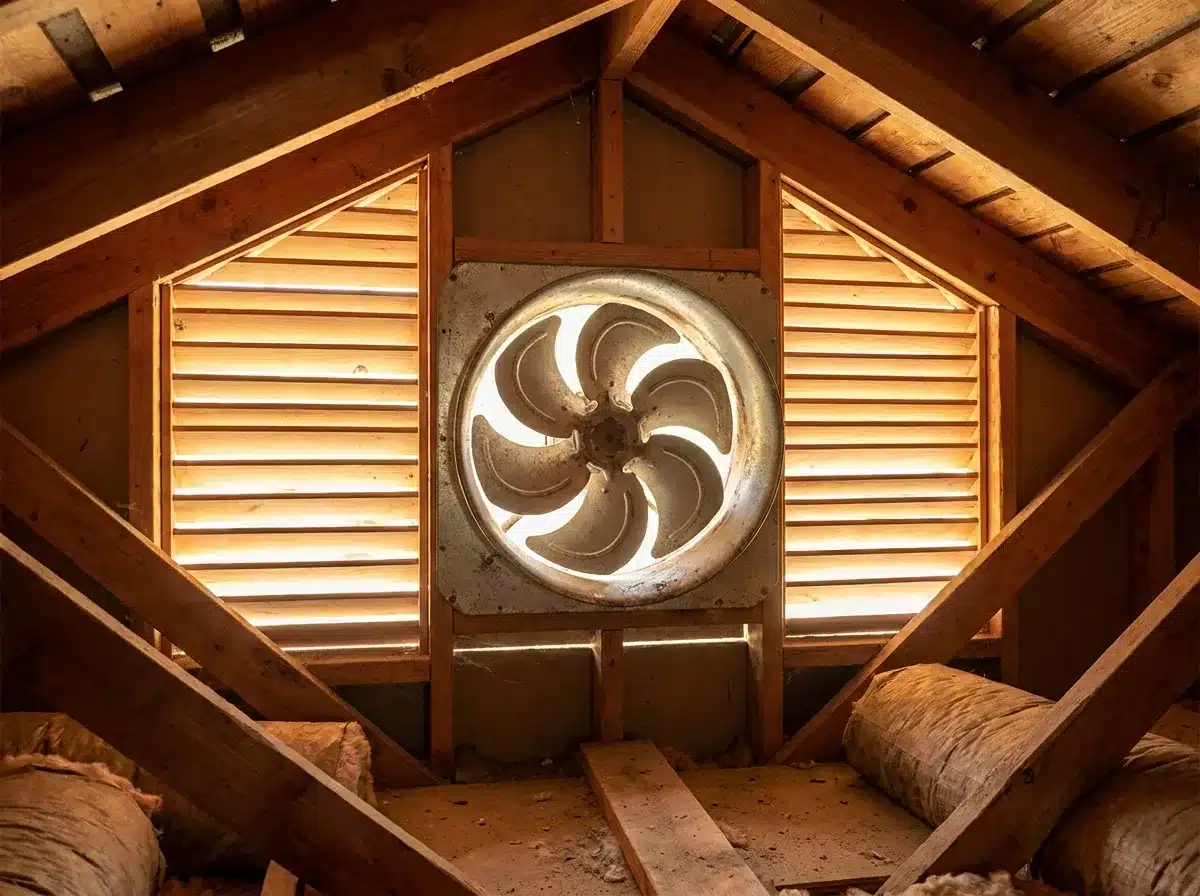
Is an Attic Fan Worth It in Fairfax?
The two most common questions homeowners ask before calling: “Are attic fans worth installing?” and “Why are attic fans not used anymore?” Here is the honest answer for Fairfax homes.
Yes, in Fairfax’s Climate
- 90 F+ summers from June through September push unventilated attic temperatures to 140-160 F
- A powered attic fan can reduce attic temps to within 10-15 F of outside air, cutting the heat load on your AC system
- Shingle life extends when attic heat stays below 130 F — roofing manufacturers tie warranty coverage to ventilation
- Upstairs rooms that stay hot despite running AC are often a ventilation problem, not an HVAC problem
- Energy savings come from reduced AC runtime, not from the fan itself — the fan uses far less power than your air conditioner
Not If Your Attic Lacks Intake Ventilation
- An attic fan exhausts hot air — but that air has to be replaced from somewhere
- Without soffit vents or eave vents providing intake, the fan creates negative pressure in the attic
- Negative pressure pulls conditioned air from your living space through ceiling gaps, recessed lights, and attic hatches
- Result: your AC works harder, not less — the fan costs you money instead of saving it
- Ahmad checks intake ventilation before installing. If your attic lacks adequate intake, he will tell you before any work begins
What Drives Attic Fan Installation Cost
Every attic fan job is different. Here is what determines the scope and cost of your installation — no generic price list, just the factors Ahmad evaluates on-site.
- Fan type: Powered attic ventilators (PAV), solar fans, whole-house fans, and gable-mount fans each require different wiring, mounting, and circuit configurations.
- Circuit run length: How far the new dedicated circuit needs to travel from your electrical panel to the attic determines wire, conduit, and labor.
- Existing wiring: If your attic already has a circuit from a previous fan, the job is a replacement — no new wiring needed. If not, a new dedicated circuit is required by code.
- Thermostat and controls: Most powered fans need a thermostat (activates the fan when attic temps hit a set point). Some homeowners add a humidistat for moisture control.
- Permit requirement: A new dedicated circuit requires an electrical permit. Fairfax County publishes no like-for-like exemption, so the permit position gets confirmed for your address before any work starts.
- Roof penetration coordination: Roof-mount fans require a roofer to cut and flash the opening. Gable-mount fans avoid this step entirely.
Attic Fan Types We Install
Each type serves a different attic configuration. Ahmad recommends based on your roof style, attic size, and existing ventilation.
Powered Attic Ventilator (PAV)
120V hardwired, thermostat-controlled. Best for attics with adequate intake vents. Exhausts hot air when attic temps exceed the thermostat set point. Requires a dedicated circuit with its own breaker. The most common type we install in Fairfax.
Solar Attic Fan
Solar panel mounted on the fan unit — no electrical circuit needed. Best for moderate heat loads and homeowners who want zero utility cost. Lower airflow than powered fans. Minimal electrical involvement unless you add a backup wired circuit for cloudy-day operation.
Whole-House Fan
Mounted in the ceiling between living space and attic. Draws cooler outside air through open windows and exhausts it into the attic. Higher-draw (120V or 240V) — requires a properly sized circuit and breaker. If your 100A panel is fully loaded, you may need a panel upgrade first.
Gable-Mount Fan
120V fan installed in an existing gable vent opening. No roof cut needed — the roofer step is eliminated entirely. EV handles the complete install: wiring, thermostat, breaker. Ideal for 1950s-1970s ranches and split-levels with gable-style attics common in Mantua and Kings Park.
Your Attic Needs Intake Vents First
This is the step most installers skip — and it determines whether an attic fan helps or hurts your energy costs.
Why Intake Ventilation Matters
An attic fan moves air out of the attic. That air must be replaced by cooler outside air drawn in through intake vents — soffit vents, eave vents, or low gable vents. Without adequate intake, the physics work against you.
Negative-pressure risk: When a powered fan exhausts air faster than intake vents can supply it, the attic develops negative pressure. That pressure pulls conditioned air from your living space — through recessed light housings, attic hatch gaps, ductwork seams, and any ceiling penetration. Your AC then runs longer to replace the cooled air the fan just pulled out.
Ahmad’s pre-install check: Before installing any powered attic fan, Ahmad inspects your attic for adequate intake ventilation. If your soffits are blocked, painted over (common in 1960s-era Fairfax homes), or simply absent, he will tell you — and recommend soffit vent installation (by a roofer or siding contractor) before the fan goes in.
This is the honesty that separates a licensed electrician from an installer who just mounts the fan and leaves. The intake check takes minutes. Skipping it can cost you years of higher energy bills.
Who Installs an Attic Fan?
Attic fan installation involves two trades. Knowing which work belongs to which trade prevents you from hiring the wrong contractor.
Electrician’s Job (EV Electric)
- Wire a dedicated 20A circuit from the panel to the attic
- Install and wire the thermostat (and humidistat if requested)
- Size and install the correct breaker in your panel
- Pull the electrical permit through City Code Administration or County LDS
- Mount gable fans (no roof penetration = complete install by EV)
- Connect and test roof-mount fans after the roofer completes the penetration
Roofer’s Job
- Cut the roof opening for roof-mount powered ventilators
- Install proper flashing around the fan housing
- Seal the penetration to prevent leaks
- Gable-mount fans skip this step entirely — no roof cut means no roofer needed
- EV can coordinate with a roofing partner if you need both trades on the same project
Looking for ceiling fans instead? Ceiling fans circulate air inside rooms — attic fans ventilate the attic space above. Different purpose, different installation.
Which Fairfax Homes Benefit Most
Your home’s era determines its attic type, existing ventilation, and the best fan option. Here is what Ahmad typically finds in Fairfax neighborhoods.
1950s-1970s Split-Levels and Ranches
Old Town Fairfax, Mantua, Kings Park, Mosby WoodsLow-slope roofs with minimal attic space. Soffit vents are often inadequate or painted over during exterior renovations. Powered gable-mount fans work well here — no roof penetration required. These homes get the hottest in summer and see the highest return from proper attic ventilation.
1970s-1990s Colonials and Traditionals
Penderbrook, Greenbriar, Country Club HillsHigher-pitch roofs with larger attic spaces. Usually have some combination of soffit and ridge venting. Both roof-mount powered ventilators and whole-house fans are viable. Ahmad checks whether existing passive ventilation is already adequate before recommending a powered fan.
2000s-2020s Townhomes and Newer Detached
Fair Oaks, Fair Lakes, Fairfax CornerModern code-compliant ventilation with continuous soffit and ridge vents. May already have passive ventilation that makes a powered fan unnecessary — the pre-install check catches this. When a fan is warranted, the existing ventilation makes installation straightforward.
Permits and Code for Attic Fan Wiring in Fairfax
Whether you need a permit depends on the scope of the electrical work — not the fan itself.
New Dedicated Circuit = Permit Required
Any new 120V or 240V circuit wired from your panel to the attic requires an electrical permit.
- City of Fairfax residents: permit through City Code Administration
- Fairfax County residents: ELER trade permit through the County’s Land Development Services (LDS)
Your address determines jurisdiction — not your ZIP code. Homes with a Fairfax mailing address may fall in either the independent City or the surrounding County.
Replacing an Existing Fan — We Confirm the Permit First
Swapping an existing attic fan on an existing circuit — same voltage, same breaker, same wiring — is a like-for-like replacement.
- The Fairfax County permit library lists replacement of electrical equipment or fixtures among the work that requires a permit, and publishes no like-for-like exemption — so we do not tell you there is one
- Thermostat swaps and fan motor replacements on existing wiring are the lightest version of this work, and still get checked
Ahmad establishes the permit position with the correct office for your specific address during the on-site evaluation. EV handles the application and scheduling whenever one is required.
City vs. County: The City of Fairfax is an independent city — not part of Fairfax County. Your tax bill shows which jurisdiction you fall under. Ahmad knows both permit offices and pulls from the correct one for your address.
Attic Fan Installation Scenarios in Fairfax
Every attic is different. Here are the jobs Ahmad handles most often, organized by what the home needs.
Gable-Mount Fan, Existing Circuit
Common in: Mantua, Old Town (1960s ranches)
Swap the old fan, verify the thermostat, confirm the circuit is sound. No new wiring, and we confirm the permit position for your address before we start. Typically a half-day job.
Gable-Mount Fan, New Circuit
Common in: Kings Park, Mosby Woods (1970s split-levels)
Wire a dedicated 20A circuit from the panel to the attic, install thermostat, pull the electrical permit. A dedicated circuit needs its own breaker in the panel.
Roof-Mount Powered Ventilator
Common in: Penderbrook, Greenbriar (1980s-90s colonials)
EV wires the circuit and mounts the fan after a roofer completes the roof penetration and flashing. Two-trade coordination — EV handles the electrical side.
Whole-House Fan Install
Common in: Country Club Hills, Old Town (2-story homes)
Wire a 120V or 240V circuit, size the breaker, ceiling-mount or gable-mount. Higher-draw appliance — if your 100A panel is fully loaded, a panel upgrade may be needed first.
Solar Attic Fan
Common in: Fair Oaks, Fair Lakes (newer, energy-conscious)
Mount-only if no backup circuit desired. Minimal EV involvement — Ahmad is upfront that solar fans rarely need a licensed electrician unless you want a wired backup for cloudy days.
Intake Ventilation Catch
Common in: Mantua, Old Town (painted-over soffits)
Ahmad inspects the attic and finds inadequate intake. Rather than install a fan that would create negative-pressure problems, he recommends soffit vent work (by a roofer) before the fan goes in.
Thermostat / Motor Swap
Any neighborhood (existing fan)
Like-for-like thermostat replacement or fan motor swap on an existing circuit. The lightest version of this work, and the permit position still gets confirmed on site before anything starts. If the fan is tripping a breaker during operation, that is an electrical troubleshooting issue — not a fan problem.
Multi-Fan Attic (Large Footprint)
Common in: Country Club Hills estates, Mantua
Larger homes may need multiple fan points to ventilate the full attic area. Each fan may require a dedicated circuit and breaker, or fans can share a circuit depending on the combined amp draw and code requirements.
Why Fairfax Homeowners Call in Summer
Attic fan demand is seasonal — and the timing matters for your comfort and your roof.
Fairfax Summers: 90 F+ from June Through September
Without ventilation, attic temperatures in Fairfax reach 140-160 F during peak summer. That heat radiates down through your ceiling, making upstairs rooms uncomfortable even when the AC is running. It also bakes your roof shingles from underneath, accelerating wear.
The conversion pattern: Most homeowners search for attic fan installation between May and July — when they feel the heat upstairs and realize their AC is running constantly. By August, attic temps have already been damaging shingles for two months. The earlier you install, the more cooling-season benefit you capture.
A properly installed attic fan with adequate intake ventilation can reduce attic temperatures to within 10-15 F of outside air. That is the difference between a 155 F attic and a 105 F attic — a meaningful reduction in heat load on your AC system and your roofing material.
Attic Fan Installation at a Glance
Quick answers to the questions Fairfax homeowners ask most. For a detailed evaluation of your specific attic, call 571-500-6637.
Attic Fan Q&A
Fairfax-specific answers from a licensed Master Electrician.
Does an attic fan need its own circuit?
Yes. Virginia code requires a powered attic fan to be on a dedicated circuit — meaning its own breaker in the panel, not shared with other outlets or lights. This prevents the fan from tripping a breaker that also controls other equipment.
How long does installation take?
Most attic fan installations are half-day jobs — typically 3 to 5 hours depending on the circuit run length and whether existing wiring is available. Gable-mount fans on existing circuits can be done in under 2 hours.
Can I install an attic fan myself?
The fan mounting may be straightforward, but the electrical wiring requires a licensed electrician in Virginia. A new dedicated circuit, breaker installation, and permit pull are not DIY tasks under Virginia code.
Will an attic fan lower my electric bill?
It reduces AC runtime by lowering the heat load radiating down from the attic. The fan itself uses relatively little electricity. The net savings depend on your current attic temperature, insulation, and whether you have adequate intake ventilation.
Attic fan vs. ridge vent — which is better?
They serve different purposes. Ridge vents are passive — they rely on convection and wind. Powered attic fans actively exhaust hot air. In Fairfax’s 90 F+ summers, passive venting alone often cannot keep up. A powered fan plus adequate intake vents is the most effective combination.
Do I need a roofer too?
Only for roof-mount fans that require a new roof penetration. Gable-mount fans install through an existing gable vent — no roof cut, no roofer. Ahmad will tell you during the estimate which type fits your attic.
How We Handle Attic Fan Installation
From first call to final test — here is what to expect when EV Electric installs your attic fan.
Call and Describe Your Situation
Tell us about your home — age, attic type, what is prompting the call (hot upstairs rooms, high energy bills, existing fan failure). We schedule a same-day or next-day visit when possible.
On-Site Evaluation
Ahmad inspects the attic: checks intake ventilation (soffit/ridge vents), measures the space, evaluates panel capacity, and determines the best fan type and mounting location for your home.
Transparent Estimate
You get a written estimate covering the fan, wiring, thermostat, breaker, and permit (if applicable). No surprises — the price is the price.
Installation and Testing
Ahmad wires the dedicated circuit, installs the fan and thermostat, and tests the complete system. For permitted work, the inspection is scheduled and passed before the job closes out.
Ready to start? Call 571-500-6637 or request your free estimate online.
Your Fairfax Electrician Around the Corner
EV Electric is based at Fairfax Circle — not an HVAC company dispatching from across the county.
Drive Times from Our Shop
- Old Town Fairfax ~5 min
- Mantua ~6 min
- Kings Park ~7 min
- Mosby Woods ~7 min
- Penderbrook ~9 min
- Greenbriar ~10 min
- Country Club Hills ~8 min
- Fair Oaks / Fair Lakes ~12 min
Same-day scheduling for attic fan work. Most attic fan installations are half-day jobs. If you call in the morning, Ahmad can often evaluate and install the same day — no waiting a week for a dispatcher to route a technician from another city.
9488 Fairfax Blvd, Fairfax, VA 22031 — near Fairfax Circle, right in the middle of the neighborhoods we serve.
Fairfax Neighborhoods We Serve
Attic fan installations across the City of Fairfax and central Fairfax County — with housing and attic notes for each area.
- Old Town Fairfax — 1950s-60s ranches and Cape Cods. Low-slope attics, often with painted-over soffit vents. Gable-mount fans are the best fit.
- Mantua — 1960s-era split-levels. Compact attics that heat up fast. High ROI from powered ventilation. Check for blocked soffits.
- Kings Park — Mix of 1960s-70s ramblers and split-levels. Gable-style attics prevalent. Many homes still on original ventilation.
- Mosby Woods — 1960s-70s colonials and split-levels. Larger lots with bigger roof footprints. May need multiple fan points for full coverage.
- Penderbrook — 1980s-90s townhomes and condos. Higher-pitch roofs with some existing ridge venting. Check HOA rules before exterior-mount fans.
- Greenbriar — 1980s-90s colonials and traditionals. Usually have partial soffit + ridge ventilation. Roof-mount powered ventilators work well here.
- Country Club Hills — Larger estate-style homes, multi-level. Bigger attic volumes may warrant whole-house fans or multiple powered ventilators.
- Fair Oaks / Fair Lakes — 2000s+ newer construction. Modern code-compliant ventilation already in place. Pre-install check often finds passive venting is adequate.
- Fairfax Corner — Newer townhomes and detached homes. Good existing ventilation. Solar fans are popular with energy-conscious homeowners here.
- Burke Centre (bordering) — 1970s-80s homes similar to Kings Park. Accessible from our Fairfax Circle shop in about 12 minutes.
Frequently Asked Questions
Answers to the questions Fairfax homeowners ask about attic fan installation — from a licensed Master Electrician.
How much should it cost to install an attic fan?
The cost depends on the fan type (powered, solar, whole-house, gable-mount), the length of the circuit run from your panel, whether existing wiring is available, and whether a permit is required. A like-for-like swap on an existing circuit is the simplest job. A new dedicated circuit with a permit and thermostat is more involved. Ahmad provides a written estimate after inspecting your attic — call 571-500-6637 for a free evaluation.
Why are attic fans not used anymore?
They are — especially in climates like Fairfax’s, where summer attic temperatures reach 140-160 F. The misconception comes from cases where attic fans were installed without adequate intake ventilation, creating negative pressure that pulled conditioned air from the living space. When installed correctly — with proper soffit and ridge venting — an attic fan remains one of the most effective ways to reduce attic heat and lower AC load.
Who normally installs attic fans?
Two trades are typically involved. A licensed electrician handles the wiring: dedicated circuit, breaker, thermostat, and permit. A roofer handles the roof penetration and flashing for roof-mount fans. Gable-mount fans do not require a roof cut — EV Electric handles the complete install. For roof-mount fans, Ahmad wires the circuit and coordinates with a roofing partner.
Are attic fans worth installing in Fairfax?
For most Fairfax homes — yes. The region’s 90 F+ summers from June through September create attic temperatures that stress your AC system and shorten shingle life. The key prerequisite is adequate intake ventilation. Ahmad checks this before installing and will tell you honestly if your attic needs soffit work before a fan will deliver savings.
Do I need a permit for an attic fan in Fairfax?
If the installation requires a new dedicated electrical circuit, yes — an electrical permit is required. City of Fairfax residents go through City Code Administration; Fairfax County residents go through County Land Development Services (LDS). Fairfax County publishes no exemption for like-for-like replacement, so we do not assume one. Ahmad establishes the permit position with the correct office for your address before any work starts, and EV handles the permit process whenever one is required.
What is the difference between an attic fan and a whole-house fan?
An attic fan (powered attic ventilator) sits in the attic and exhausts hot attic air to the outside — it ventilates the attic space. A whole-house fan mounts in the ceiling between the living space and attic, drawing cooler outside air through open windows and pushing it into the attic. Different purpose, different wiring requirements. Ahmad recommends based on what your home actually needs.
Can an attic fan damage my roof?
Not when installed correctly. Roof-mount fans require proper flashing and sealing — that is the roofer’s scope. The more common concern is negative pressure from inadequate intake vents, which does not damage the roof but does increase your energy costs. Ahmad’s pre-install ventilation check prevents both problems.
How do I know if my attic fan is working properly?
A functioning attic fan should cycle on when attic temps reach the thermostat set point (typically 100-110 F) and you should feel airflow at the intake vents when the fan runs. If the fan runs constantly, never turns on, or trips a breaker during operation, those are signs of an electrical or thermostat issue that needs diagnosis.
About EV Electric Services
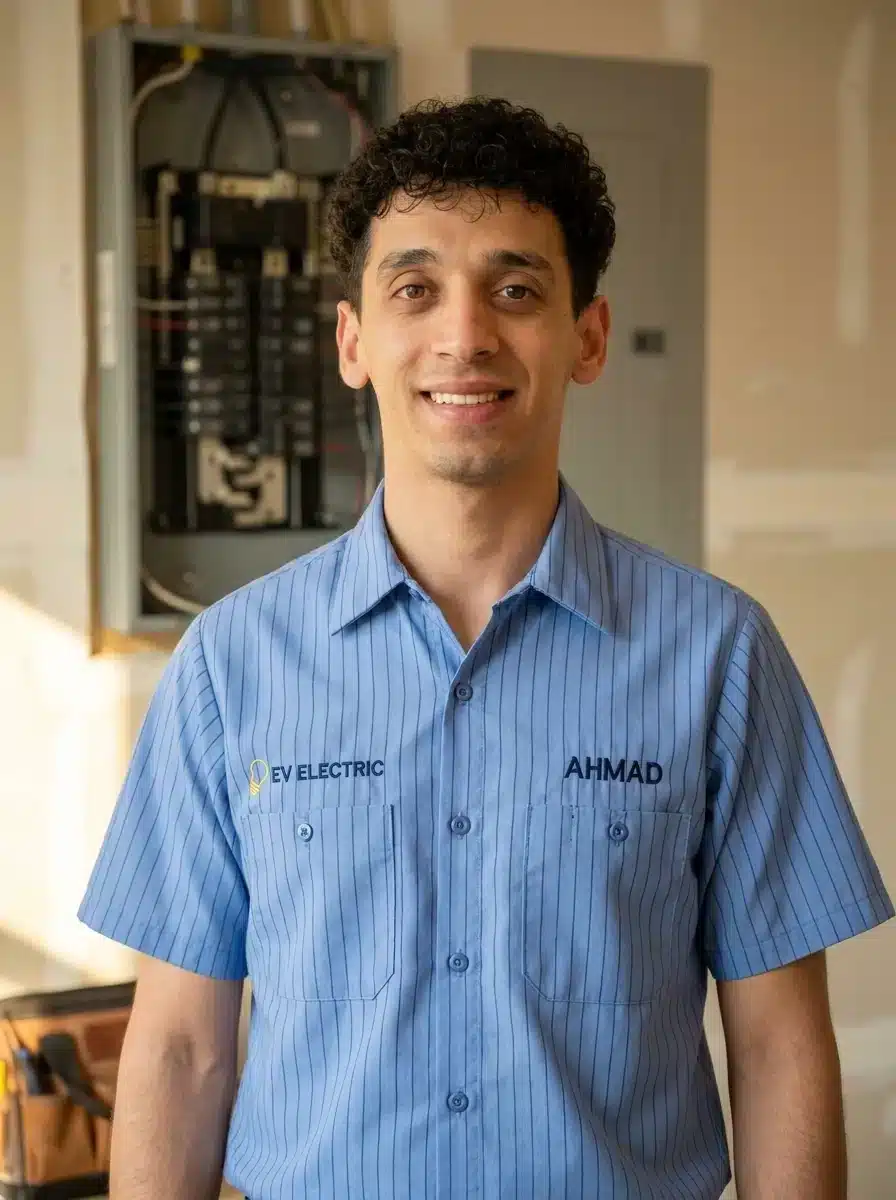
Ahmad Shaban, Master Electrician
EV Electric Services is a residential electrical company based at 9488 Fairfax Blvd, Fairfax, VA 22031 — right at Fairfax Circle. Ahmad Shaban is a Virginia-licensed Master Electrician who does the work himself. No subcontractors, no dispatched technicians you have never met.
Attic fan installation is electrical work — a dedicated circuit, proper breaker sizing, thermostat wiring, and a permit when required. Ahmad brings the licensed expertise that ensures the wiring is done right and the permit is pulled from the correct jurisdiction for your address.
113 five-star reviews from Fairfax homeowners. Rated 5.0 on Google.
Related Electrical Services in Fairfax
Attic fan work often connects to other electrical needs. Here are the services Fairfax homeowners pair with attic fan installation.
Ready to Cool Your Attic?
Ahmad will check your attic ventilation, recommend the right fan type, wire the dedicated circuit, and handle the permit. One electrician, one visit, done right.
571-500-6637